The best adventure tire is not the most aggressive tire you can fit. It is the tire that stays predictable on the surface where you have the least margin—and remains livable everywhere else you ride.
A rider commuting all week and exploring maintained gravel on Saturday needs a different compromise than a loaded bike crossing deep sand, mud, or loose rock. Start with that truth before looking at tread patterns.
Start with the surface that gives you trouble.
Think about the hardest ten percent of your normal riding. If loose climbs, wet roots, or deep gravel are what stop your progress, your tire should create confidence there. If your real challenge is rain-soaked highway mileage, stability, wet braking, and wear deserve more weight.
“Off-road” covers too much ground to be useful by itself. Break your riding into actual surfaces:
- Hardpack and maintained gravel: stable blocks and predictable transitions matter more than extreme spacing.
- Loose rock and broken trail: carcass strength, edge grip, and impact resistance move up the list.
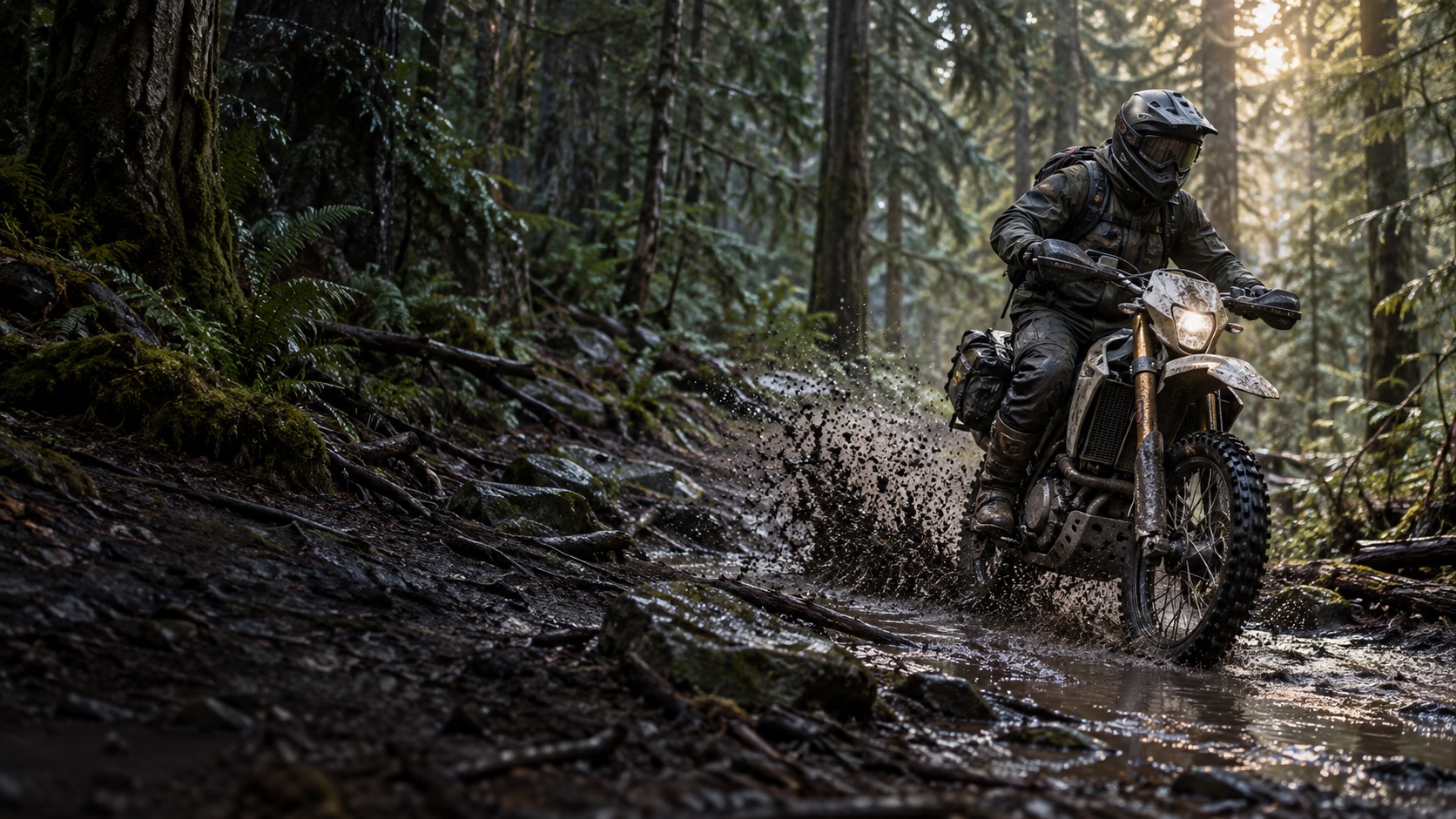
- Mud and soft soil: open tread that can clear itself becomes far more important.
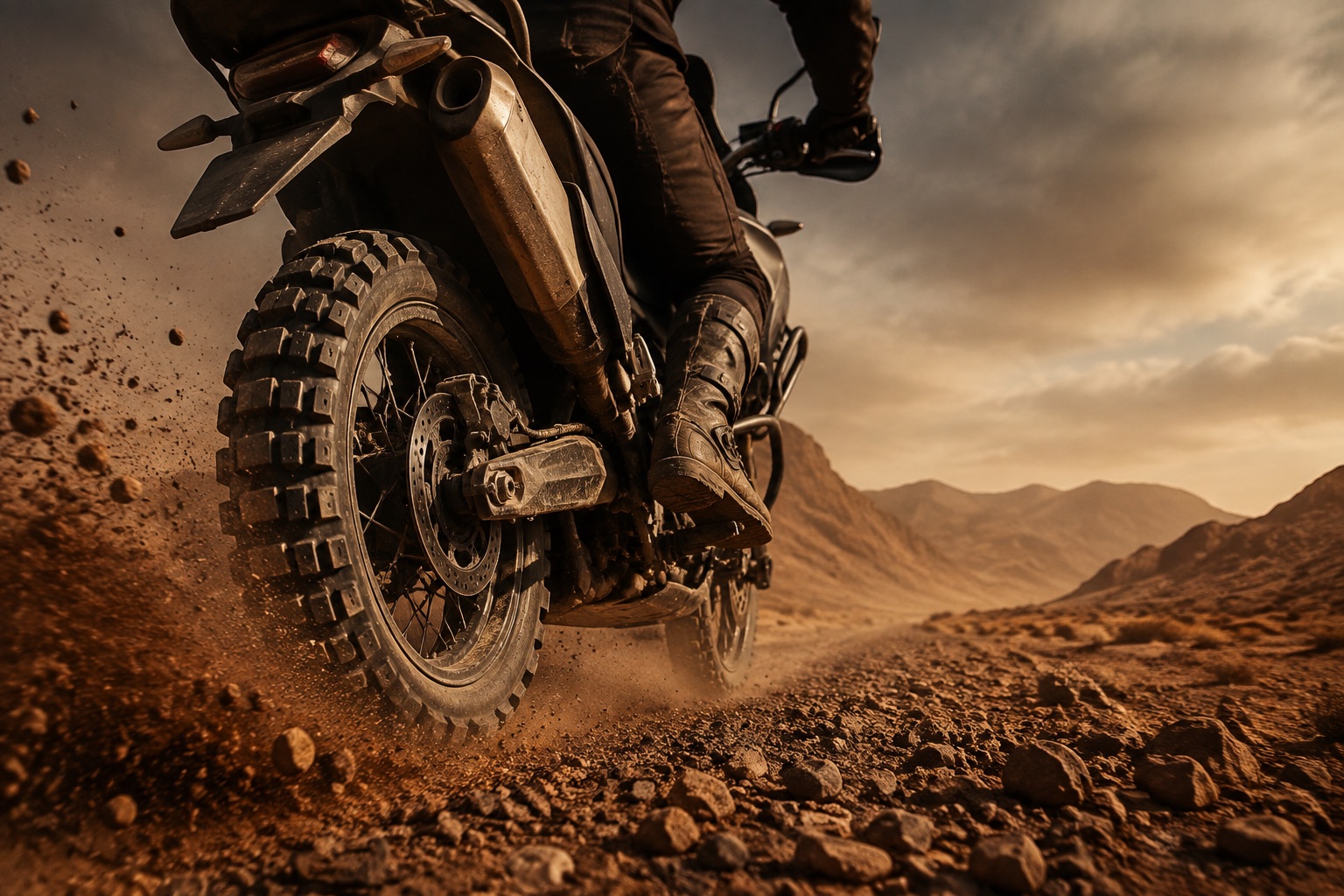
- Sand: steering behavior and the tire's ability to stay on top of the surface matter as much as raw bite.
Choose for the surface that can end your day—not the easiest miles that get you there.
Use the road split honestly.
Labels such as 80/20, 50/50, and 30/70 are useful for comparison, but there is no universal test behind them. One brand's 50/50 tire can behave much differently from another's. Treat the number as a starting point, then look at tread spacing, block support, construction, and rider reports from similar motorcycles.
| Typical use | Usually favors | Tradeoff to expect |
|---|---|---|
| Mostly pavement with gravel access roads | Close, supported tread blocks and road stability | Less drive in deep mud or sand |
| True mixed riding | Balanced block spacing and reinforced construction | More road noise and faster wear than a street-biased tire |
| Technical dirt with pavement connections | Open tread, strong edges, and loose-surface drive | Less refinement and shorter road life |
Account for weight, pressure, and pace.
A tire that feels composed on a lightweight dual sport can flex, heat, and wear differently under a fully loaded adventure bike. Rider weight, luggage, passenger use, sustained highway speed, and the motorcycle's power all change the job the tire has to do.
Follow the motorcycle and tire manufacturers' load and pressure guidance. Airing down can improve compliance or traction in some conditions, but pressure changes affect heat, rim protection, handling, and load capacity. There is no single pressure that is right for every bike and surface.
Know what is underneath the tread.
Tread gets the attention, but carcass construction shapes steering feel, heat, impact resistance, and how the tire conforms to rough ground. A stiffer tire may feel more protected under a heavy bike, while also transmitting more sharpness and becoming harder to mount in the field.
Bias-ply versus radial
Neither construction wins everywhere. The correct choice depends on the motorcycle, approved sizes, load, speed rating, and intended use. Match the manufacturer's fitment first; compare construction only after the tire is appropriate for the bike.
Tube-type versus tubeless
The tire, rim, and motorcycle must work as a system. A tubeless marking does not automatically make every wheel tubeless-compatible, and a tube-type setup has different roadside repair needs. Verify the wheel design and tire instructions before ordering.
Confirm exact fitment before checkout.
Use the exact year, make, model, wheel size, load index, and speed rating required for your motorcycle. Do not assume that a familiar model name means every trim or production year uses the same specification.
BraapKing's year/make/model filter will narrow compatible options, but the final check should still include the motorcycle owner's manual and the tire manufacturer's current fitment information.
Make the final choice.
When two tires both fit, choose between them using the compromises you are willing to live with. A simple decision order keeps the catalog from taking over:
- Eliminate anything that does not match the exact motorcycle specification.
- Prioritize the surface with the least margin for error.
- Check load, sustained road use, and expected pace.
- Compare wear, noise, wet behavior, and roadside service needs.
- Ask for help when two options still look equal.
The goal is not a tire that sounds impressive on a spec sheet. It is a tire that makes the motorcycle easier to trust when the route stops being simple.